Imagine the Possibilities of a Pain-free Life / Call Today 833-4-PAIN 800
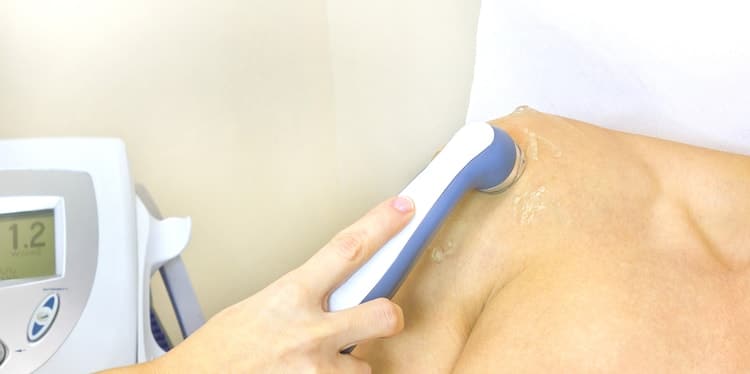
A noninvasive, soothing treatment, ultrasound therapy alleviates pain and promotes healing at the source of an injury. Ultrasound waves penetrate deep below the surface of the skin, targeting soft tissues such as muscle, tendons, ligaments, and nerves. If you’ve recently suffered an accident or are experiencing pain, continuing reading to learn how ultrasound therapy can be used to treat your injury.
Ultrasound therapy is a pain-relieving technique that incorporates the use of a small, handheld device. The device releases ultrasound waves, which vibrate at a higher frequency than sounds audible by the human ear. These short wavelengths travel faster through the air and are able to penetrate deep into bones and tissue.
When ultrasound therapy is performed, the frequency of the ultrasound wave vibrations increases tissue temperature beneath the surface. This increase in temperature results in three main effects that help to reduce inflammation, alleviate pain, and promote healing, such as:
The soothing effect of ultrasound therapy is greatly caused by its deep-heating technology. The higher frequency of ultrasound waves increases tissue temperature, which provides a warming sensation to afflicted areas. This heat therapy is comparable to the warm baths, hot showers, and heating pads that we use when an area is swollen, sore, or injured. Except, the targeted approach of ultrasound therapy penetrates deep-heat directly to the injured tissue, as opposed to blanketing the area as a whole.
Deep-heating is useful for a plethora of reasons, including its ability to soothe pain. However, deep-heating is especially useful when a patient is suffering from tight or stiff muscles as well as scar tissue. Deep-heat prompts tight tissue to relieve the tension it was holding and improves elasticity in stiff tissue. For those suffering from tense muscles or painful scar tissue, you’re aware that when tissue resists motion, even every day movements can become incredibly painful.
Deep-heating increases range of motion as well as tissue elasticity, to reduce pain from limited flexibility and to relieve tension from sore muscles.
Ultrasound waves catalyze an effect in the body called cavitation, in which microscopic gas bubbles surrounding soft tissue expand and contract rapidly. When these tiny bubbles burst, they fragment tissue with low fiber content. This process eliminates injured tissue while leaving the healthy tissue intact.
Cavitation is believed to aid the cellular processes that work to repair injured tissue. The fragmenting of injured tissue triggers the body’s natural healing process, helping to speed up recovery time.
When an injury becomes inflamed, it is often more painful and harder to effectively treat it at the source. Ultrasound waves increase tissue temperature such that circulation to the tissue is also increased. An increase in circulation means an increase in nutrient and oxygen-rich blood, which helps to clean the site of the injury, as well as promote natural healing processes.
Likewise, increased circulation helps to bring down inflammation at the site of the injury.
Ultrasound therapy is best suited to treat injuries of soft tissue, including strains, soreness, or tightness. Injuries often treated with ultrasound therapy include:
Several of our ChiroCare of Florida offices are equipped with ultrasound technology to help our patient alleviate pain and inflammation, and begin healing quicker and more effectively.
Make an appointment for ultrasound therapy at an office near you: