Imagine the Possibilities of a Pain-free Life / Call Today 833-4-PAIN 800
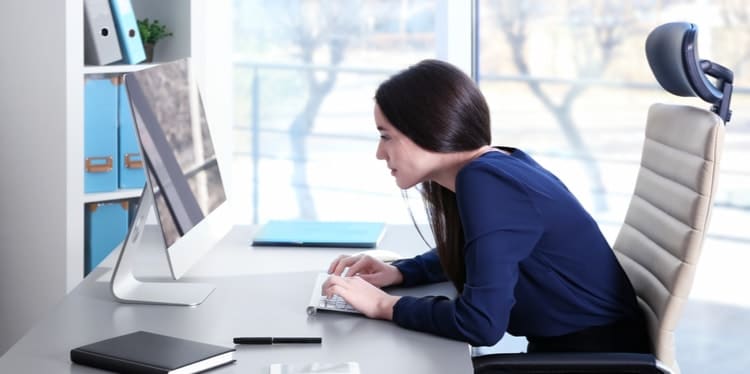
When you hear overprotective, your first thought most likely isn’t your posture. Perhaps you think of your pets, your family, even your car. But, your posture? That probably didn’t cross your mind. However, for those living with back pain or a healing injury, you might want to take notice.
Overprotective posture is when you purposely refrain from placing pressure, twisting or bending, or using a certain muscle, body part, or even an entire side of your body. When a part of the body is in pain, we often try to rest it. So, we subconsciously assume that when we’re mobile and moving we should continue to rest that body part.
For instance, if you’re experiencing pain in your lower right back, you might step forward with more pressure on your left foot to avoid placing as much strain on your right side. Or, if your back hurts when you fully straighten your spine, you might be inclined to stay slightly stooped, so as to not aggravate the pain. While at first this does happen subconsciously, as you adjust to constantly assume this new position, you’re affecting your overall posture.
When you repeatedly contort your body to fit your overprotective posture, you’re forcing yourself to operate outside of your natural alignment. From your vertebrae and spinal discs to the muscles and tissue supporting them, this shift in posture greatly affects your body.
Your current posture is maintained both by the natural curvature of your spine as well as your postural muscles, which support your spine and help to keep you upright. Not maintaining proper posture or adequate spinal support can add strain to your muscles and stress the spine. If this is continued over time, the stress of maintaining poor posture can actually alter the anatomical characteristics of the spine.
This means that by constantly defaulting to your overprotective posture, you’re off-setting muscles, discs, and joints, possibly leading to constricted blood vessels, nerve flow, and nerve endings. This can lead to back and neck pain, headaches, and fatigue, and can even negatively impact digestion, organ function, and breathing patterns.
Maintaining proper posture is incredibly important, because your posture is what keeps each part of your body balanced and properly supported. Maintaining proper posture means that you’re keeping each part of your body – even the smallest bones – in alignment with its neighboring parts. So, even if limiting the pressure on a swollen knee or a sore back feels good in the moment, the pressure you’re removing from one part of your body is now being transferred to another that cannot necessarily support the excess strain.
Despite the momentary relief you may feel while resting an injured or healing body part, the excess stress you’re placing on the neighboring areas is what can really result in serious pain. Maintaining proper posture evenly distributes stress throughout muscles, ligaments, joints, and the spine, helping the body move – and heal – more efficiently.
By all means, resting an injured or sore body part is an excellent idea. However, resting implies that your whole body is at rest – not solely the injured part. When you’re up and about, make a conscious effort to not adjust your body to cater your injury. If you must, speak with your doctor about obtaining a brace, cane, or walker. While you might have originally not thought you needed one of these supportive devices, they will absorb the excess stress that you’re attempting to remove from the injury.
Likewise, try following these steps throughout the day:
Though you might think you’re doing what’s best by protecting an irritated or injured area by maintaining an overprotective posture, you could be doing more harm than good. If you’re suffering from any aches and pains that you’ve been overprotecting, visit ChiroCare of Florida today. The solution could be much closer than you think.